
Home Health Monitoring for Elderly Parents: A Simple Guide for Families
As our parents get older, small changes in their health can be easy to miss – especially if we don't live with them or see them every day. A few simple checks at home, done regularly and written down, can give early warning of a problem and make every doctor's visit more useful.
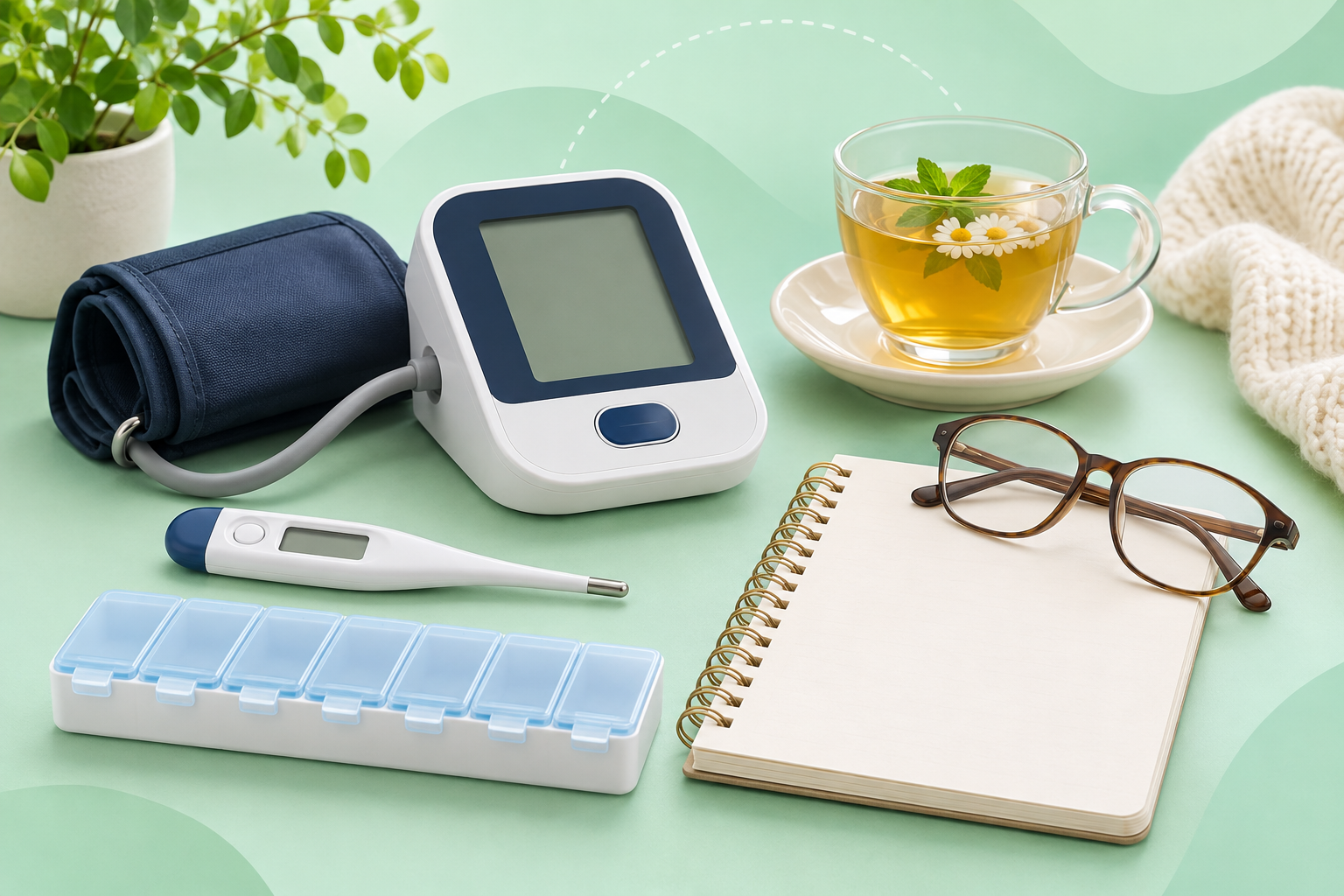
You don't need a hospital set-up. A good blood pressure monitor, a pulse oximeter, a thermometer and a notebook (or a note on your phone) are enough for most families.
What to check – and how often
- Blood pressure: especially important if your parent has high blood pressure, diabetes, or heart or kidney disease. Ask their doctor how often to measure – many recommend daily readings for a week before a check-up.
- Oxygen level and pulse: useful during a cough, cold, fever or breathing illness, and for people with asthma, COPD or heart conditions.
- Temperature: whenever they feel unwell. In older adults a fever can be mild even with a serious infection, so look at the whole picture, not just the thermometer.
- Blood sugar: if they have diabetes, as advised by their doctor.
- Weight: once a week, at the same time of day. Sudden weight gain can be a sign of fluid build-up in people with heart problems.
Make it a simple routine
- Fix a time. For example, after waking up and before morning medicines.
- Keep all the devices in one place – a small box or drawer – with spare batteries.
- Keep one log with the date, time, readings and any symptoms. A shared note or a family WhatsApp group works well when brothers and sisters share the care.
- Teach, don't just do. Show your parent how to use each device and keep large, simple instructions next to it.
- Review once a week. Look for patterns rather than worrying about a single number.
Warning signs that need a doctor
- Blood pressure much higher or lower than their usual pattern, or dizziness and fainting
- An oxygen level of 92% or lower, or new breathlessness
- A fever lasting more than two days, or any fever with confusion
- Sudden confusion, unusual drowsiness or a change in behaviour
- Chest pain
A drooping face, weakness in one arm or slurred speech can be signs of a stroke. Call for emergency help immediately – every minute matters.
Medicines: the other half of home care
Many older adults take several medicines a day. A weekly pill organiser, a simple medicine list (name, dose and timing) kept in their wallet, and refills ordered before they run out can prevent missed doses and mix-ups. Take all medicines – including supplements – to doctor visits so they can be reviewed together.
Build your home health kit
Start with the two devices most families use every week: an Automatic Digital BP Monitor and a Fingertip Pulse Oximeter. Not sure which device suits your parents? Talk to our team – we are happy to help you choose.
This article is for general information only and is not a substitute for professional medical advice. Always consult a qualified doctor about your health or the health of a family member.